
Introduction
Tired of boring, one-dimensional haircuts that lack personality and movement? The iconic 70s short shag haircut is making a major comeback, offering that perfect blend of retro cool and modern edge. This layered, textured style delivers effortless volume and rock-and-roll attitude without the high-maintenance routine.
As a hairstylist specializing in textured cuts for over a decade, I’ve witnessed the shag’s evolution from vintage throwback to contemporary must-have. The beauty of the 70s short shag lies in its incredible versatility—it flatters virtually every face shape, hair texture, and personal style while requiring minimal styling effort.
In this comprehensive guide, you’ll discover 17 stunning variations of the 70s short shag haircut, from choppy bobs to curly layers. We’ll cover everything from choosing the right cut for your hair type to styling tips, maintenance hacks, and answers to your most pressing questions. Whether you’re going for full-on Stevie Nicks vibes or a subtle modern interpretation, you’ll find the perfect shag inspiration here.
Table of Contents
Why This Hairstyle
The 70s short shag haircut has endured for over five decades because it solves multiple hair dilemmas simultaneously while delivering undeniable style.
Key benefits include:
- Works with your natural texture – Embraces waves, curls, and straight hair without fighting against your hair’s natural pattern
- Low maintenance styling – Air-dry friendly with built-in movement and volume that doesn’t require extensive heat styling
- Face-framing versatility – Customizable layers and bangs that flatter round, oval, square, and heart-shaped faces
- Adds volume to fine hair – Strategic layering creates the illusion of thickness and body where hair falls flat
- Perfect for any age – Equally stunning on women in their 20s, 40s, 60s, and beyond
- Easy to personalize – Adaptable to punk, bohemian, professional, or edgy aesthetics through color and styling
Choosing the Right Hairstyle
Selecting the perfect 70s short shag variation depends on your hair texture, face shape, lifestyle, and maintenance preferences.
Best Cuts for Your Hair Type
Fine, thin hair thrives with shorter shag variations that incorporate choppy layers starting at the crown, creating maximum lift without weighing hair down. The disconnected layers prevent that flat, limp look while adding dimension.
Thick, coarse hair benefits from longer shag cuts with razored ends that remove bulk while maintaining movement. Heavy texturizing throughout prevents the dreaded triangle shape and allows natural texture to shine.
Wavy and curly hair pairs beautifully with shags featuring longer layers that enhance natural curl patterns without creating excessive volume or frizz. The key is cutting curls dry to see their true shape and movement.
Color Considerations
The 70s shag truly shines with dimensional color. Highlights, lowlights, and balayage techniques emphasize the cut’s movement and layers, creating depth that monochromatic color cannot achieve.
Consider timing: Get your color done first, then cut 1-2 weeks later. This allows you to see how color affects your hair’s texture and condition before committing to the cut.
Warm tones like honey, caramel, and copper complement the retro vibe authentically, while cool-toned highlights offer a more modern interpretation. Discuss placement with your colorist—face-framing pieces should be lighter for maximum dimension.
17 70s Short Shag Haircuts That Still Look Cool Today
#1 Choppy Brown Bob with Vibrant Highlights
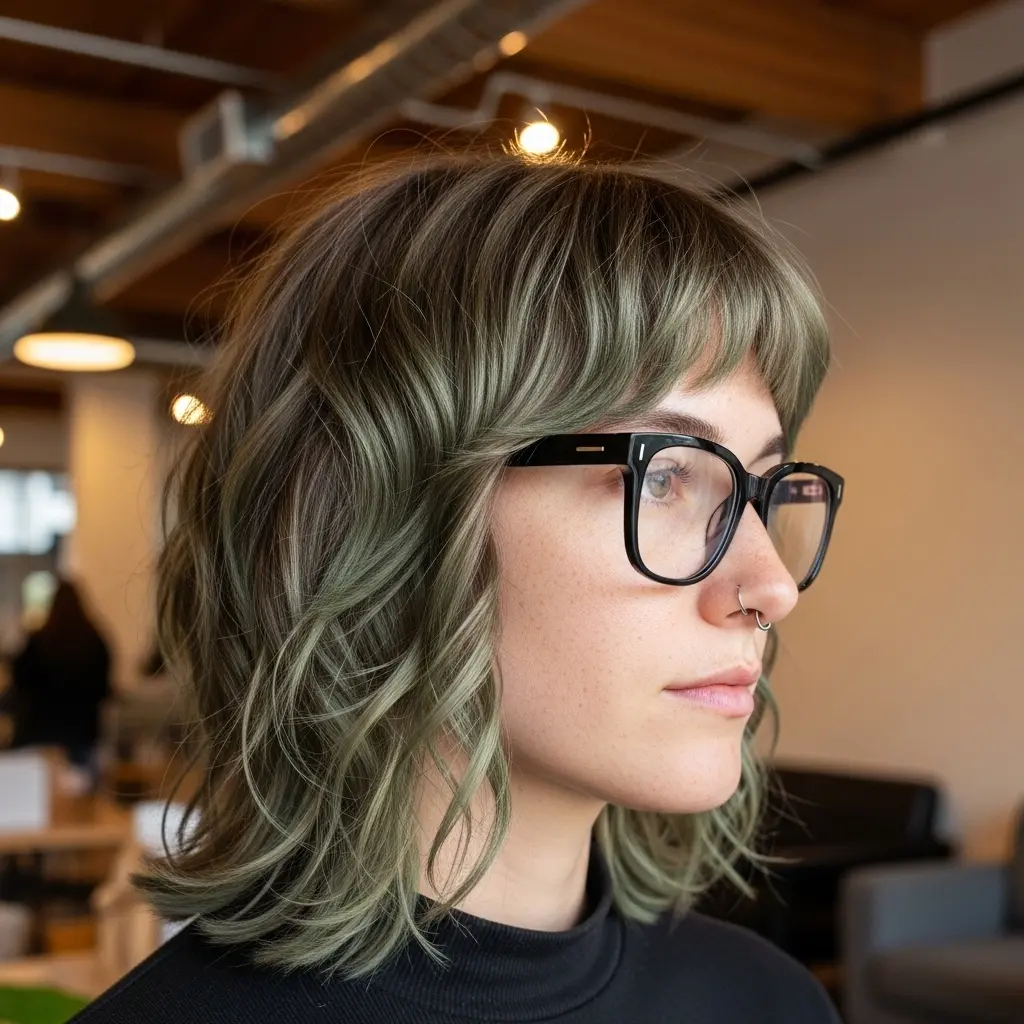
This edgy interpretation combines a chin-length bob foundation with aggressively choppy layers throughout for maximum texture and movement. Vibrant caramel or golden highlights placed strategically around the face illuminate the cut’s dimension while adding warmth to brunette bases. The disconnected layers create that coveted bedhead texture that’s effortlessly cool, requiring minimal styling beyond scrunching with sea salt spray and air-drying.
#2 Short 70s Shag Hairstyle
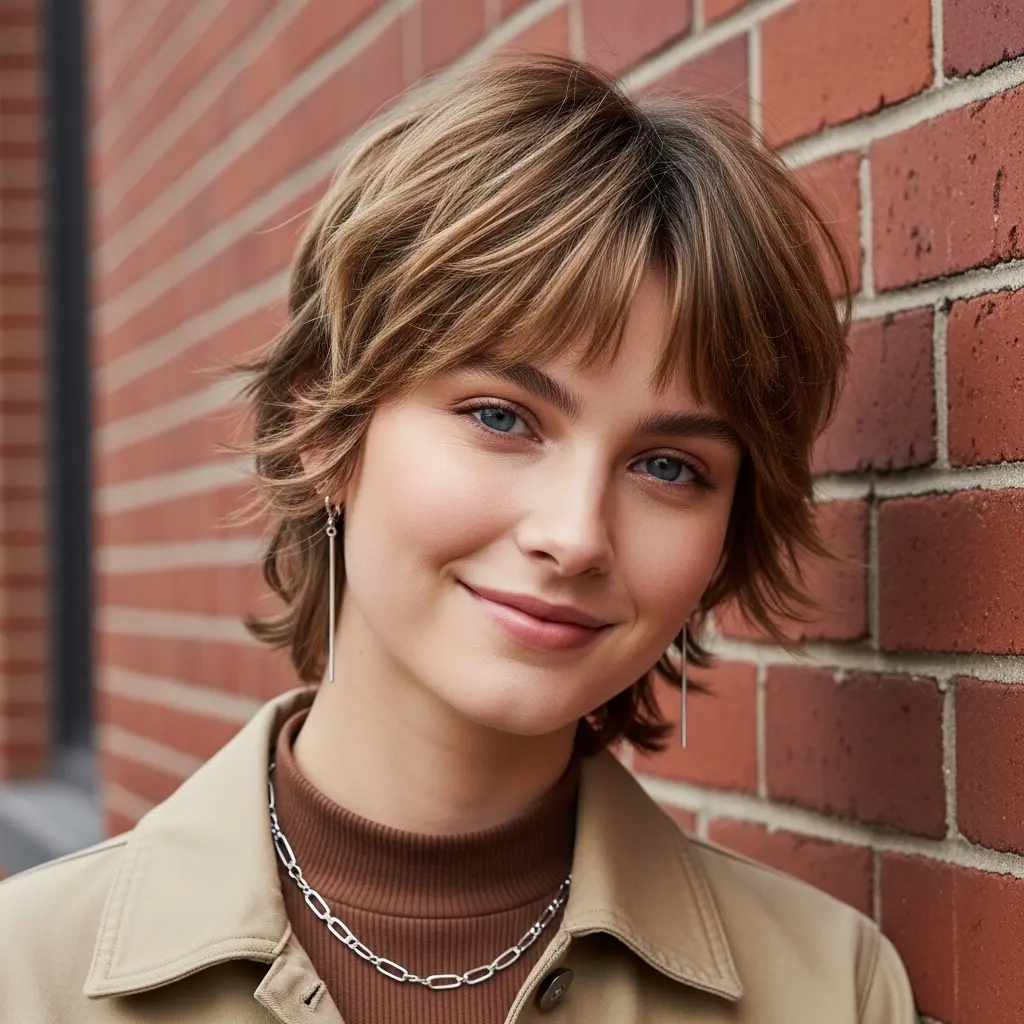
The classic short 70s shag sits between ear and chin length with heavily layered crown sections that create significant volume and lift. This authentic vintage cut features feathered ends that flip outward naturally, channeling icons like Jane Fonda and Joan Jett. Wispy bangs graze the eyebrows while face-framing layers elongate the face beautifully, making this universally flattering for most face shapes and hair textures.
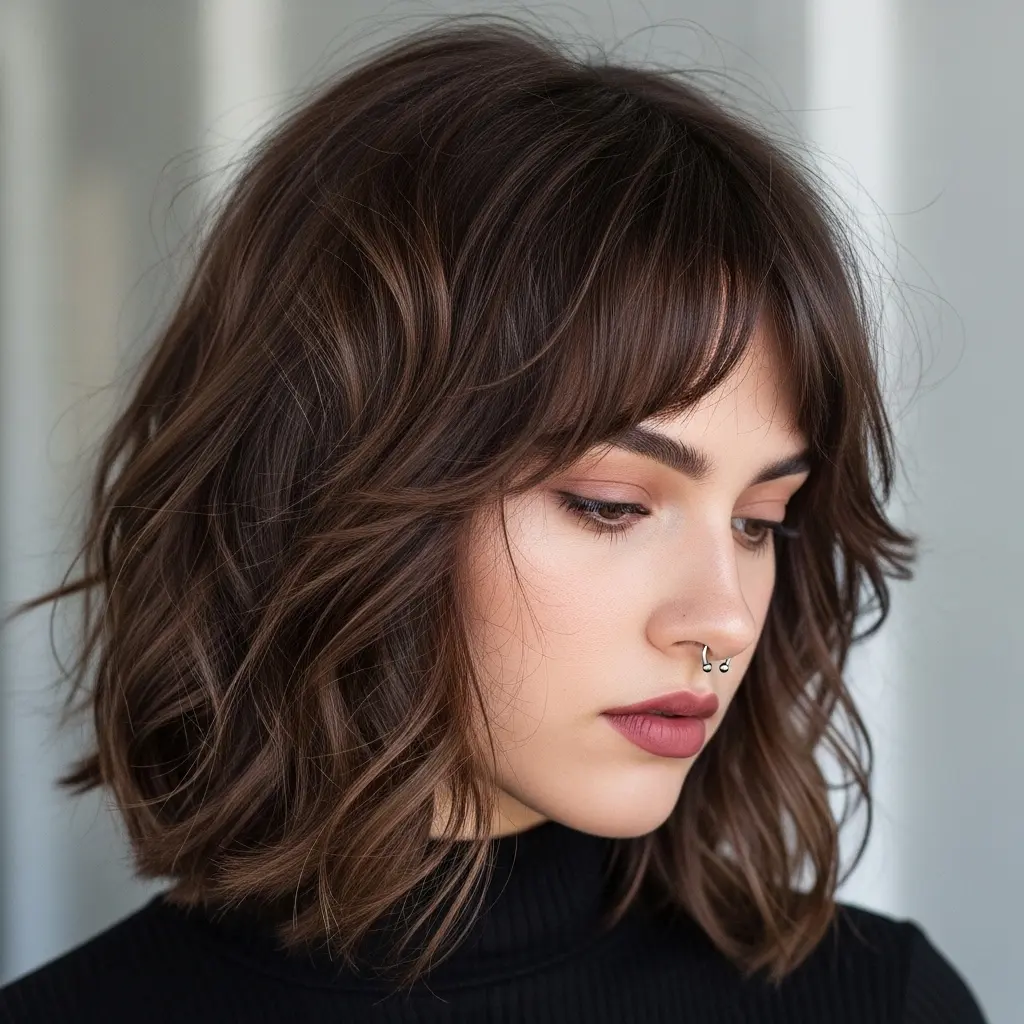
#3 Short 70s Shag Haircut with No Bangs
For those who prefer keeping their forehead clear, this bang-free variation maintains all the shag’s textured glory while featuring a deep side part and longer front layers. The absence of bangs creates a more sophisticated, grown-up interpretation while still delivering that iconic layered movement. This style works exceptionally well for high foreheads and heart-shaped faces, drawing attention to cheekbones and eyes without fringe interference.
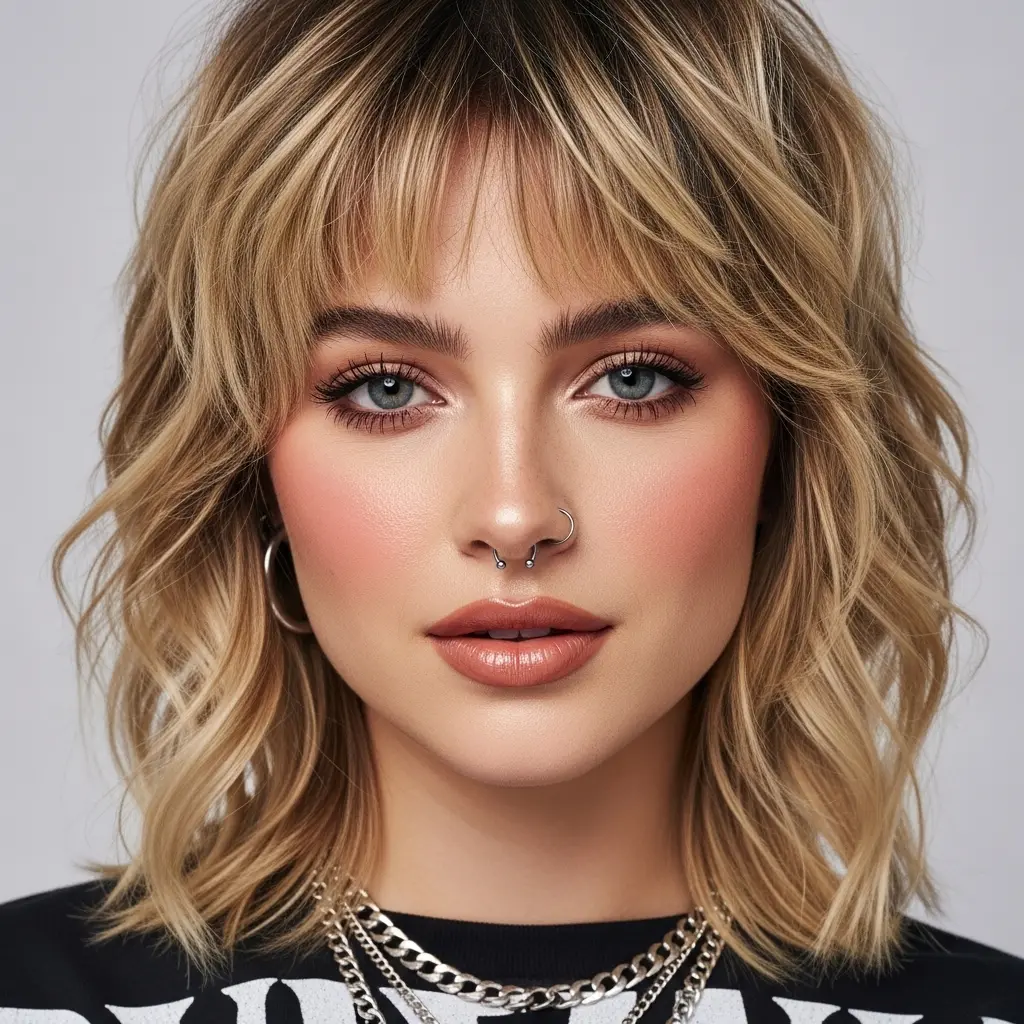
#4 70s Shag Haircut for Short Wavy Hair
Wavy hair and the 70s shag create magic together, as natural wave patterns amplify the cut’s inherent texture and movement effortlessly. This variation features mid-length layers that enhance S-shaped waves without creating excessive volume or pyramid shapes. The key is cutting while hair is dry in its natural wavy state, allowing the stylist to see exactly how each layer will fall and move in real-world conditions.
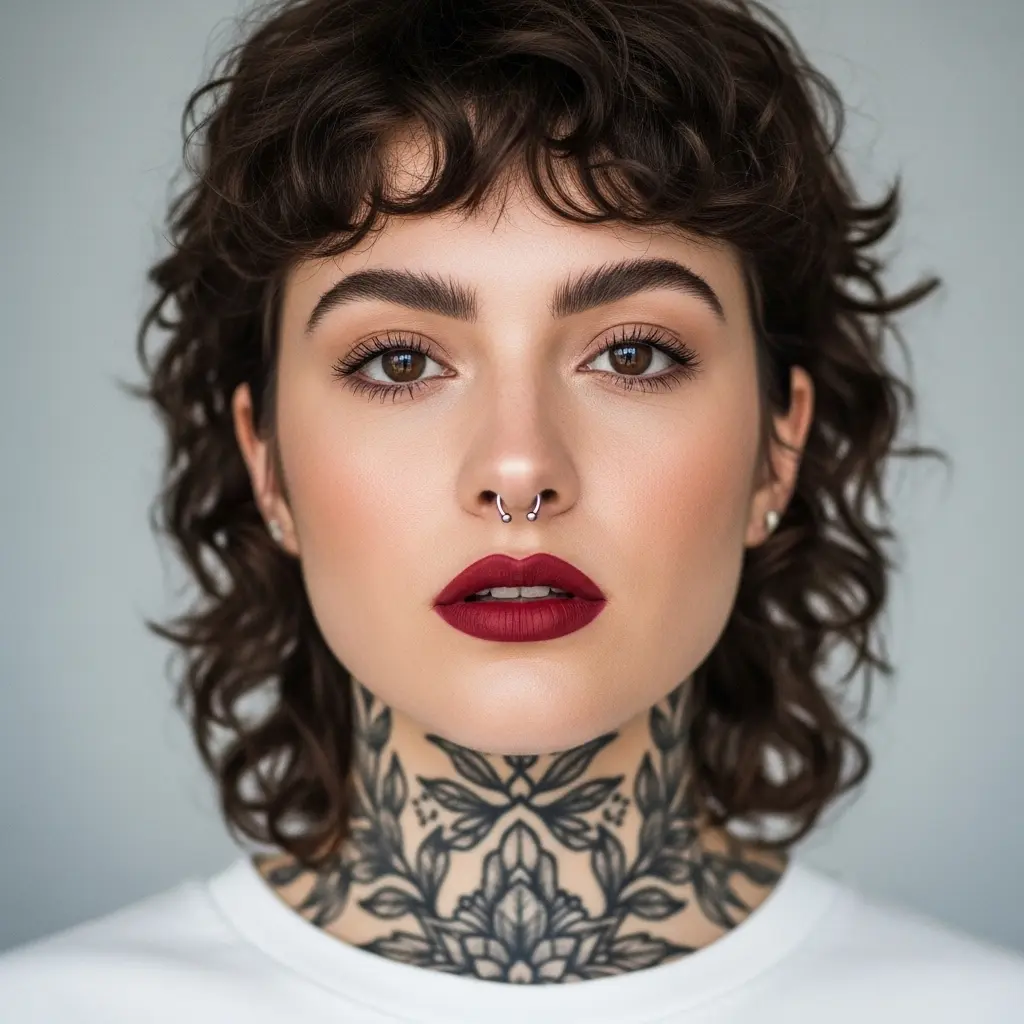
#5 70s Shag Haircut with Short Curly Layers
Curly hair transforms the traditional shag into a voluminous, cloud-like masterpiece when cut with the right technique and layer placement. This version features shorter layers concentrated at the crown with gradually longer pieces toward the perimeter, preventing the dreaded triangle shape. Cutting curls dry and curl-by-curl ensures each ringlet maintains its integrity while contributing to the overall rounded, balanced silhouette that curly shags demand.
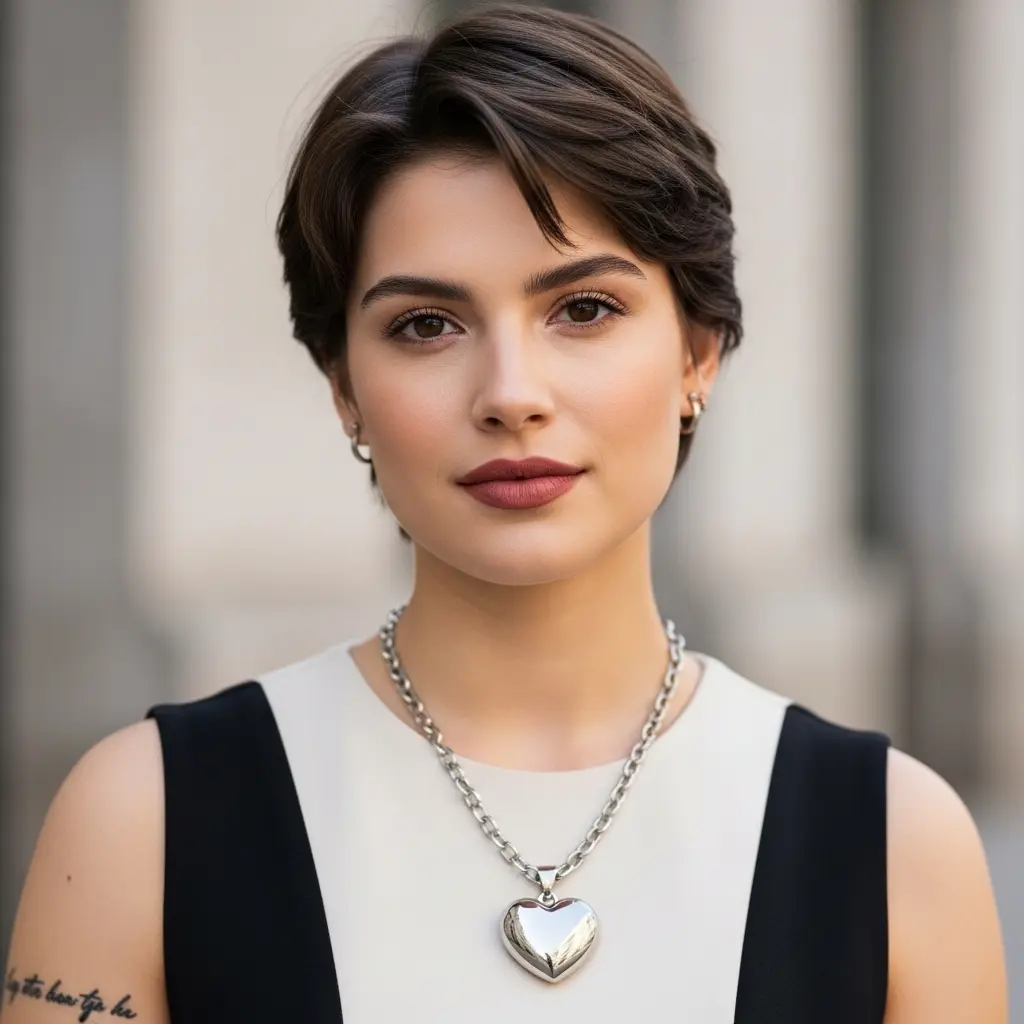
#6 70s Shag Haircut with Short Back
The short-back shag creates dramatic contrast by keeping the nape area closely cropped while maintaining length and volume through the crown and sides. This modern twist adds an edgy, undercut-inspired element to the classic shag, offering coolness at the neck during warmer months. The graduation from short back to longer top creates beautiful stacking and architectural shape that photographs exceptionally well from every angle.
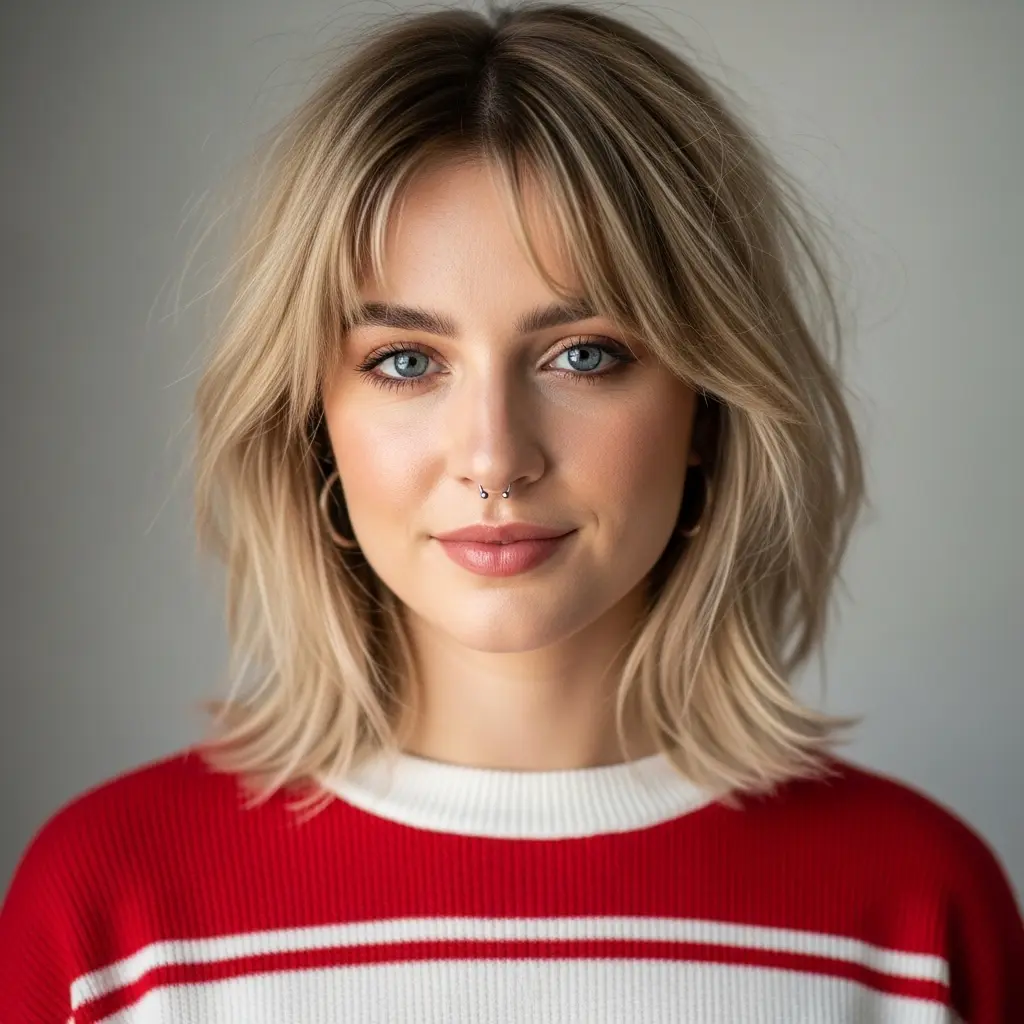
#7 70s Shag for Short Blonde Hair
Blonde hair showcases the shag’s layers with stunning clarity, as lighter tones catch and reflect light differently than darker shades. This platinum, golden, or ash blonde variation benefits from babylights or highlights that create dimension between layers, preventing the cut from appearing flat or one-dimensional. The lightness also makes the feathered, pieced-out texture more visible and defined, emphasizing the cut’s retro roots and playful movement.

#8 1970s Short Shag Hairstyle
This historically accurate interpretation stays true to the decade’s original aesthetic with maximum volume at the crown, flipped-out ends, and face-framing feathered layers. The authenticity lies in the cutting technique—razored rather than scissor-cut for those signature wispy, feathered ends that characterized the era. Pair with center-parted curtain bangs and warm, natural tones for the most genuine 70s throwback experience that Farrah Fawcett would approve.
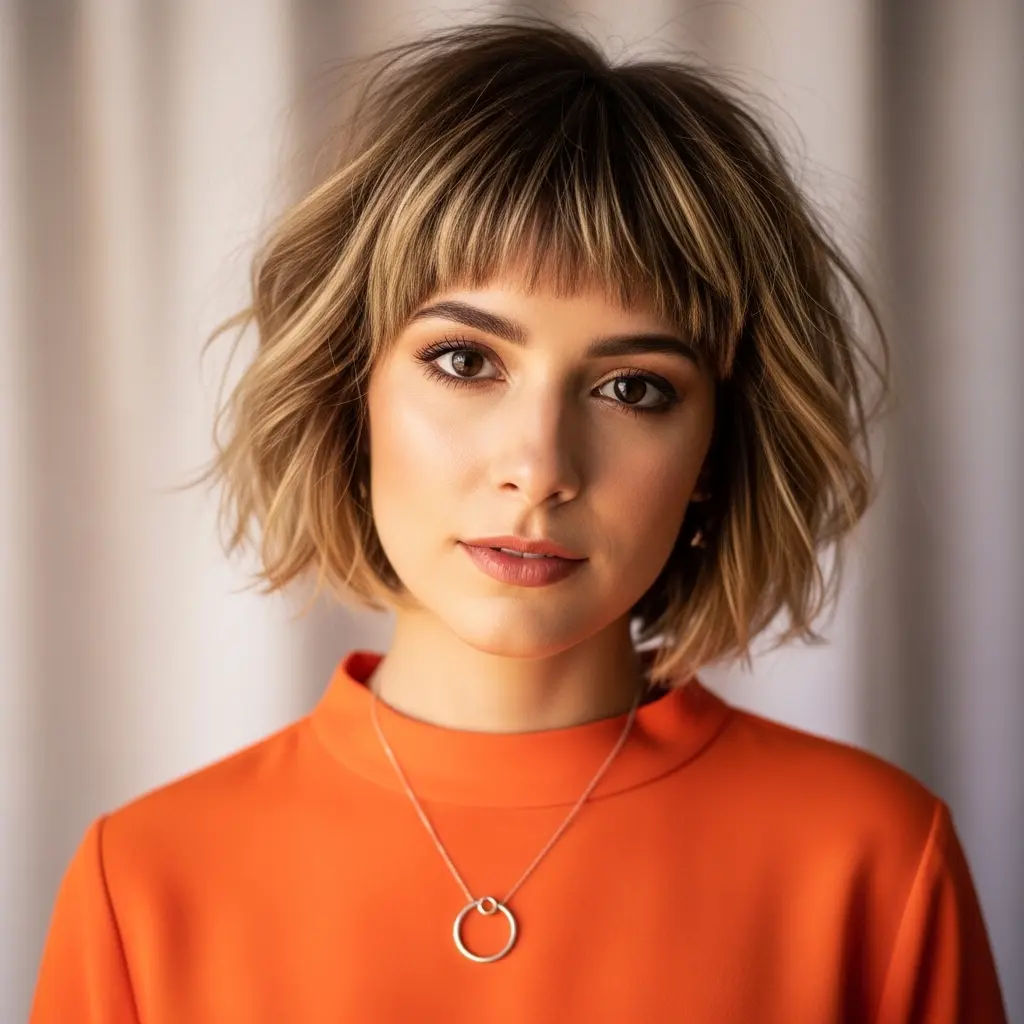
#9 70s Shag for Short Thin Hair
Fine, thin hair finds its best friend in the strategically layered short shag that creates the illusion of fullness through clever cutting and texturizing. This variation features shorter layers beginning at the crown to generate lift at the roots where fine hair typically falls flat. The disconnected, choppy pieces throughout add visual weight and dimension, while avoiding over-thinning at the ends preserves whatever natural density exists for a fuller appearance overall.
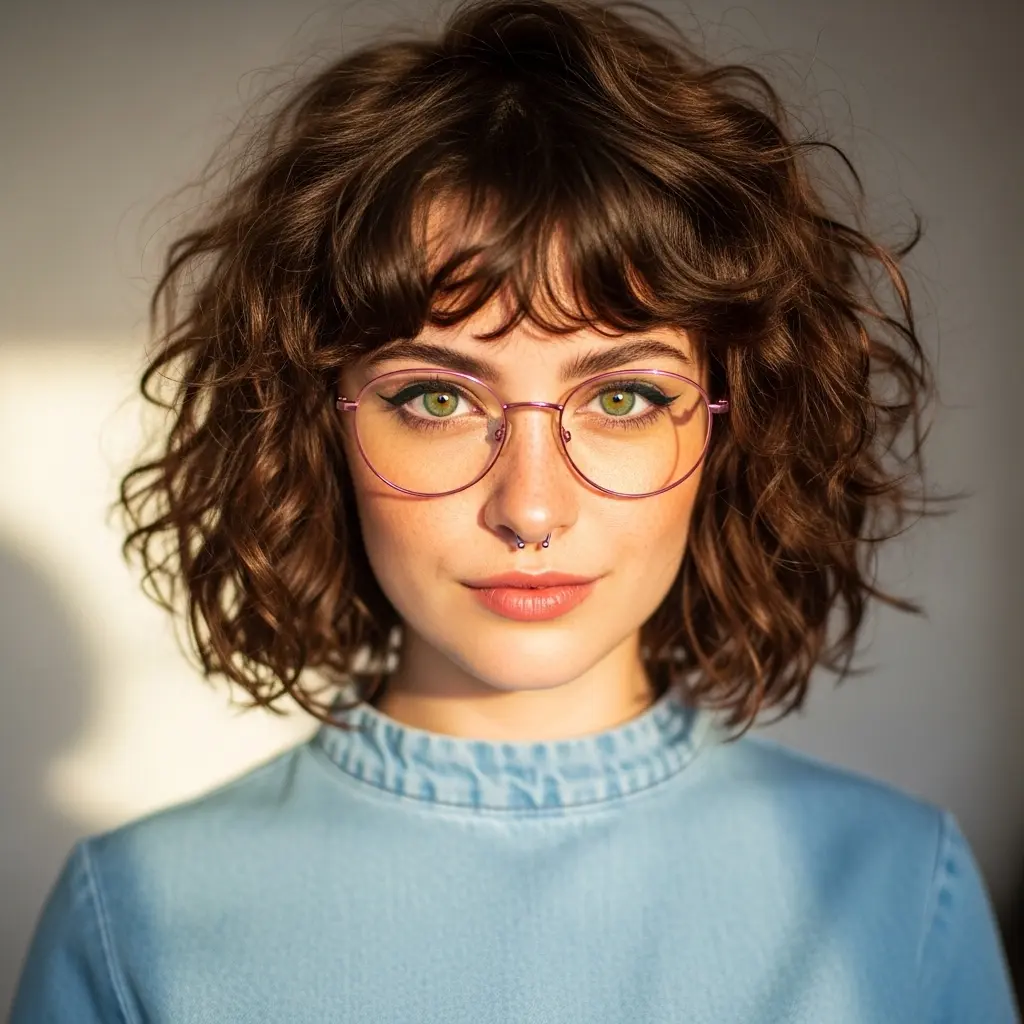
#10 Short 70s Shag Haircut for Girls
Younger women and teenagers embrace the shag for its rebellious, non-conformist energy that aligns with youthful self-expression and experimentation. This age-appropriate version tends toward more extreme layering, bolder color choices like pastels or vivid fashion shades, and asymmetrical elements that push boundaries. The low-maintenance aspect appeals to busy students and young professionals who want style without the time investment, making it practical and fashion-forward simultaneously.
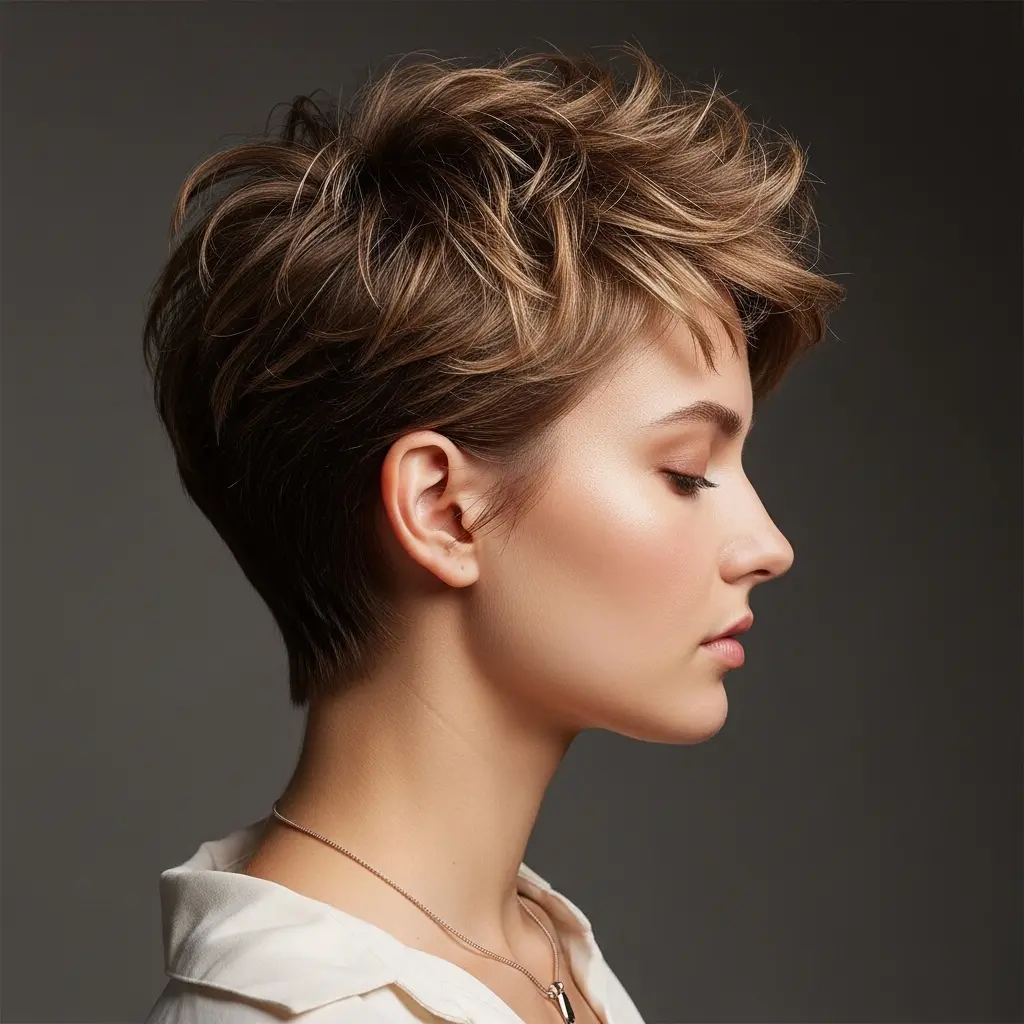
#11 70s Shag Haircut with Short Bangs
Short, choppy bangs sitting well above the eyebrows add a bold, statement-making element to the traditional shag structure. This dramatic fringe choice draws immediate attention to the eyes while creating vertical lines that elongate the face beautifully. The contrast between short bangs and longer layers throughout creates interesting visual tension and modern edge, departing from softer curtain bang variations for something decidedly more daring and fashion-forward.
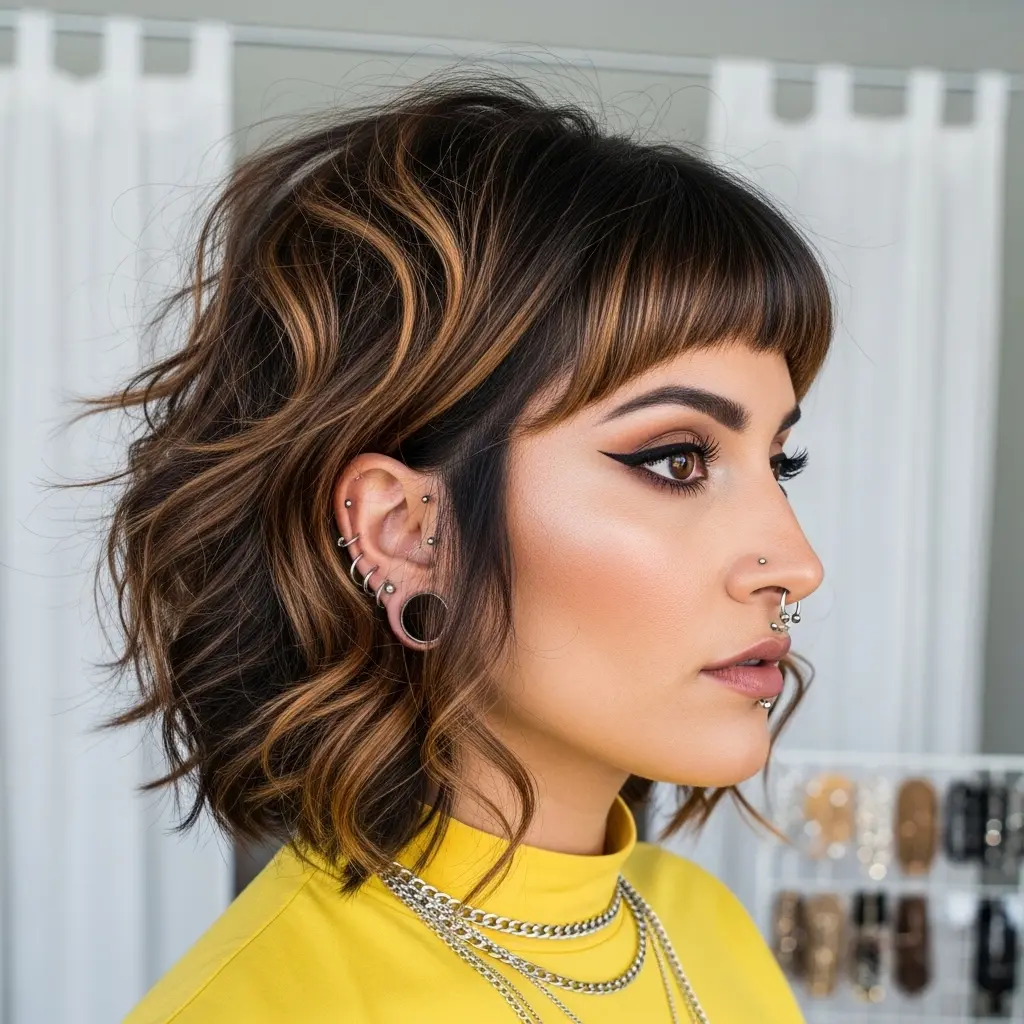
#12 Short Straight 70s Shag Haircut
Straight hair requires different layering strategies to achieve the shag’s signature movement, relying on sharp angles and piece-y separation rather than natural texture. This sleek variation benefits from point-cutting techniques that create texture at the ends, preventing blunt, heavy lines that straight hair naturally creates. Strategic blow-drying with a round brush adds the necessary bend and movement, while lightweight styling products maintain separation without weighing down the layers’ deliberate architecture.
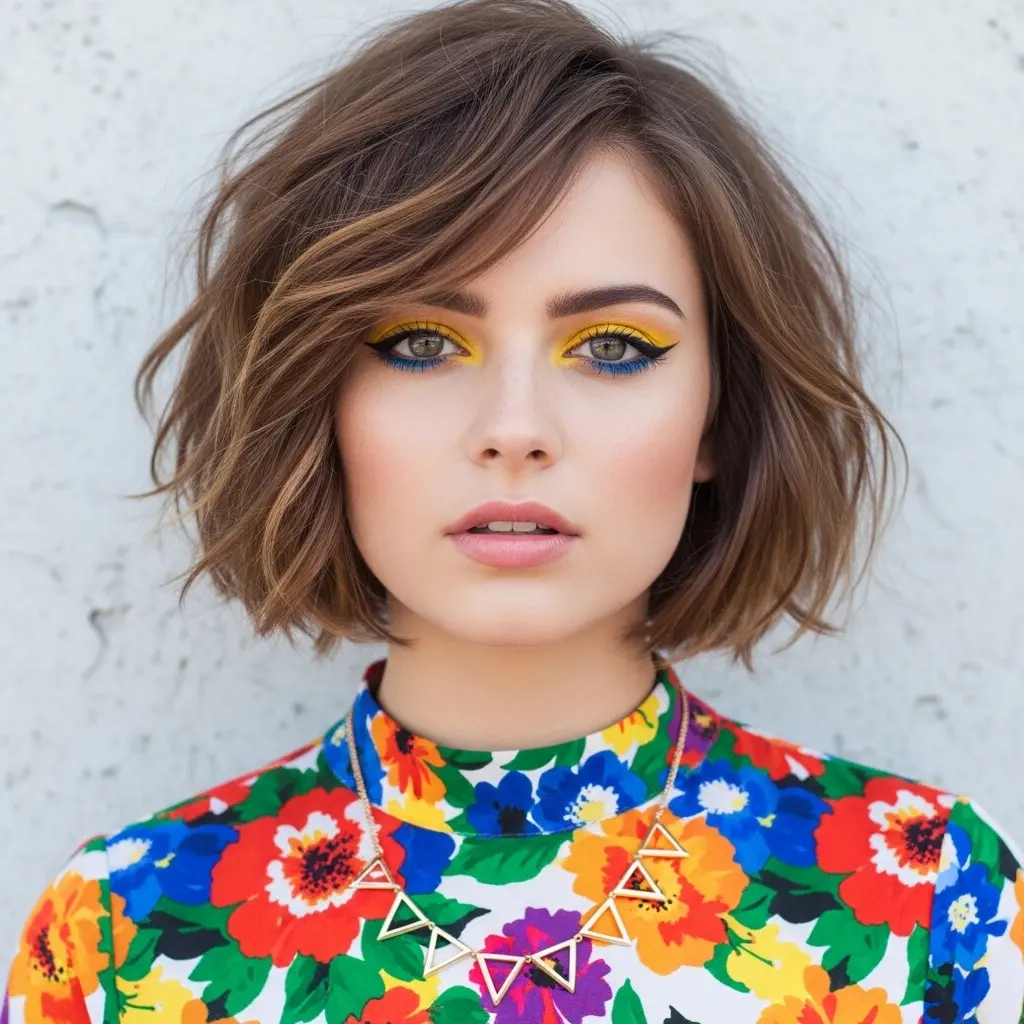
#13 Short 70s Shag with Curtain Bangs
Curtain bangs represent the perfect marriage of 70s nostalgia and contemporary trends, parting down the center and framing the face symmetrically. This soft, face-framing fringe style flatters nearly every face shape by creating vertical lines and drawing attention to the eyes and cheekbones. The longer length—typically grazing the cheekbones—offers versatility for styling swept back, tucked behind ears, or worn forward for different looks throughout the week.
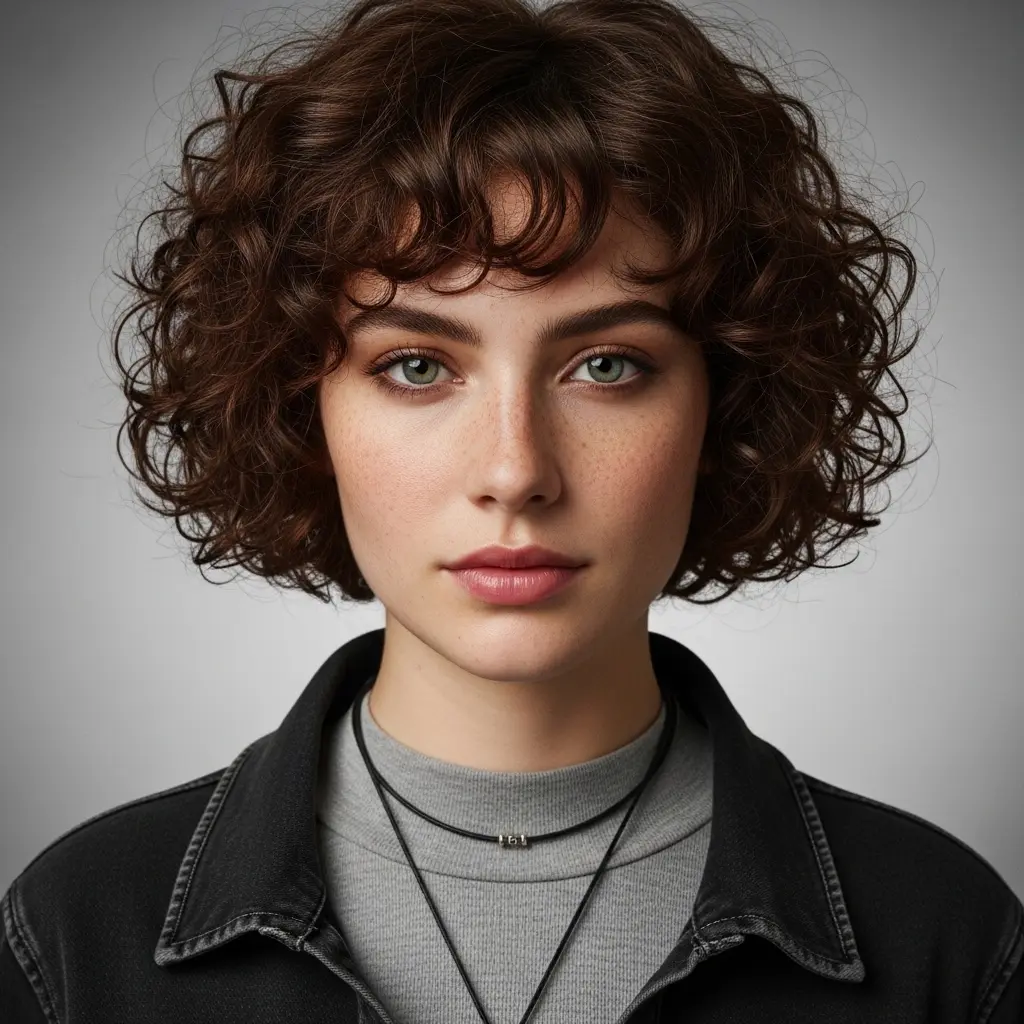
#14 70s Curly Short Shag Haircut
Curly textures require specialized cutting approaches that honor the curl pattern while creating the shag’s characteristic shape and dimension. This variation features layers cut into dry curls to accurately assess how each section will spring and sit, preventing the common mistake of cutting curls wet and having them shrink unexpectedly short. The result is a beautifully rounded silhouette with controlled volume that celebrates natural texture rather than fighting against it through excessive thinning.
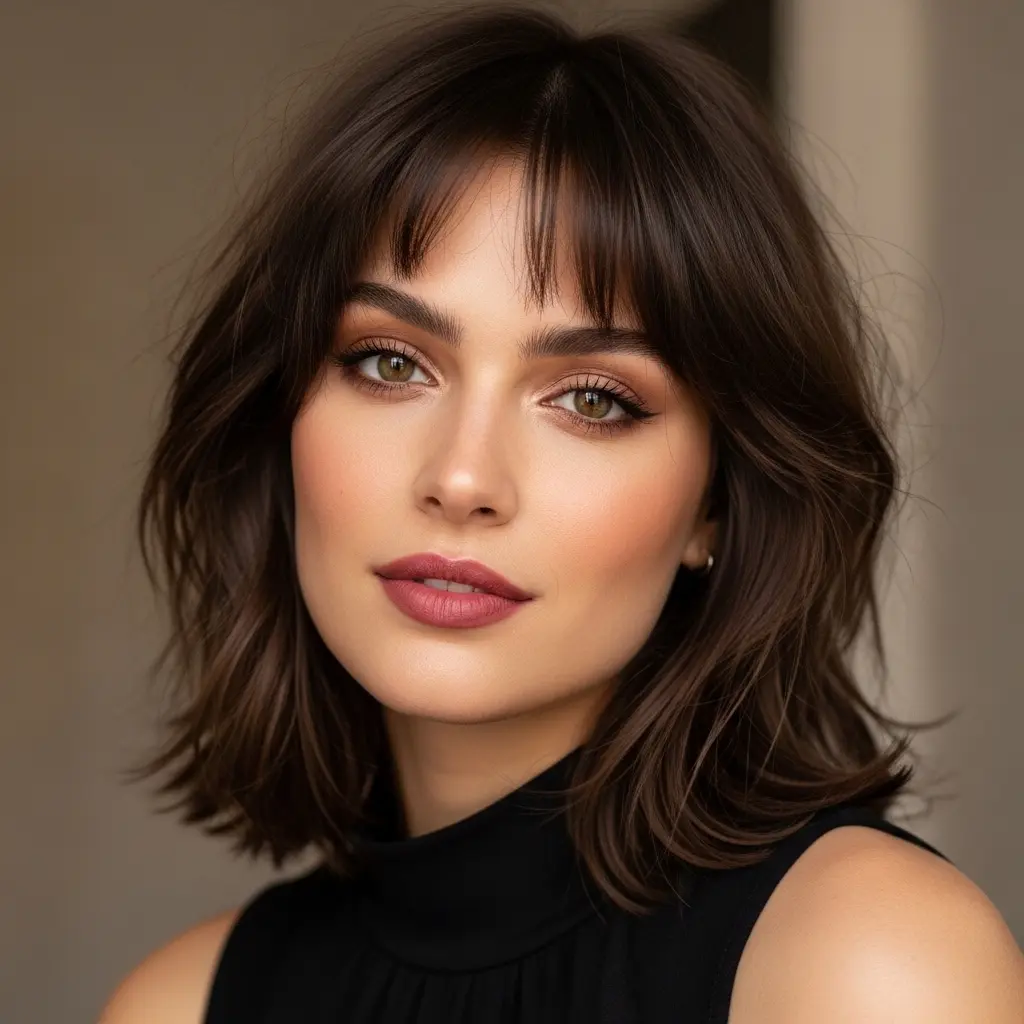
#15 Trendy 70s Short Shag Haircut
This contemporary update incorporates modern coloring techniques like money-piece highlights, undercut details, or asymmetrical elements that nod to current trends while maintaining shag fundamentals. The “trendy” designation means embracing whatever current hair fashion dictates—perhaps disconnected layers, extreme texturizing, or unconventional color placement—while keeping the recognizable shag structure intact. It’s the perfect bridge between vintage inspiration and today’s Instagram-worthy aesthetic that evolves with seasonal trends.
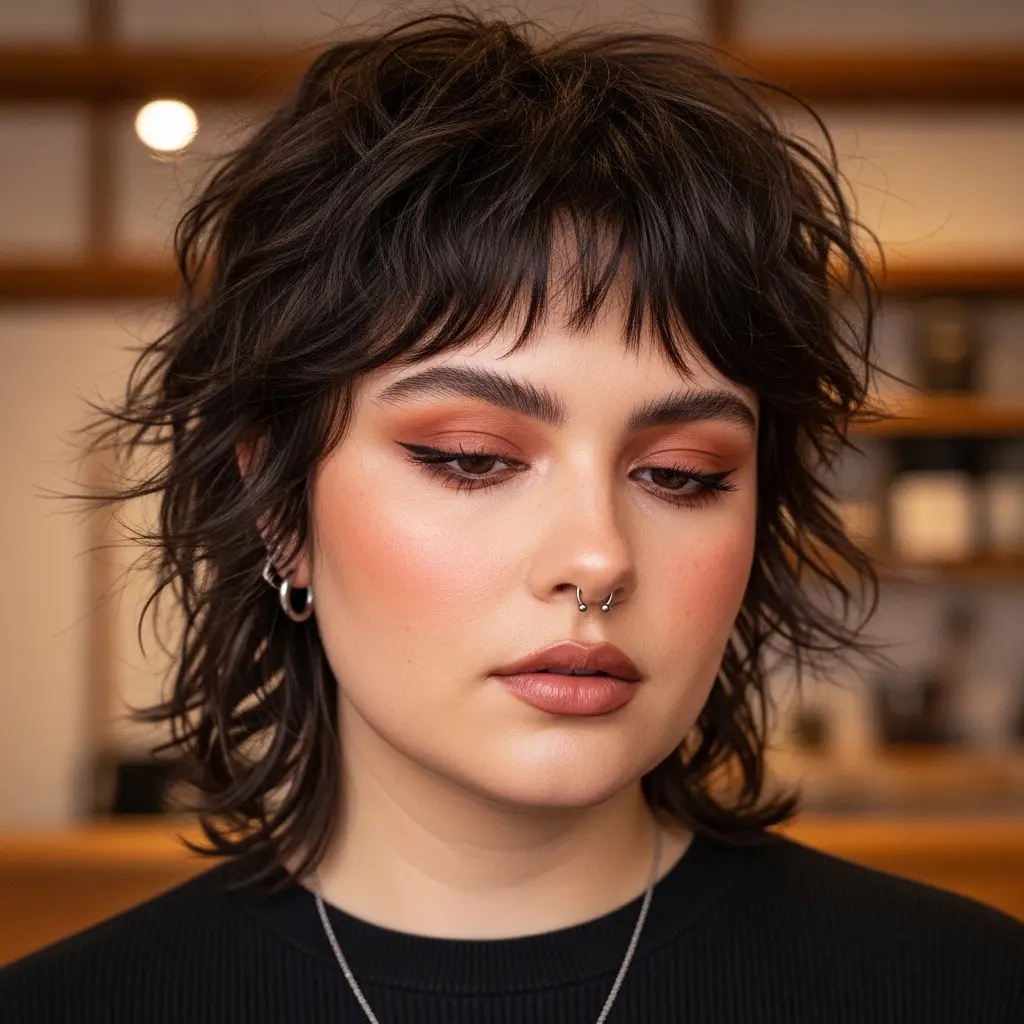
#16 Short 70s Shag for Plus Size Women
The 70s short shag flatters plus-size women beautifully by creating vertical lines and movement that balance proportions without overwhelming facial features. This inclusive variation focuses on customizing layer placement to frame the face flatteringly, with slightly longer front pieces that slim and elongate. The volume at the crown draws the eye upward, creating pleasing proportions, while the overall texture and movement add softness and femininity that complements curves rather than competing with them.
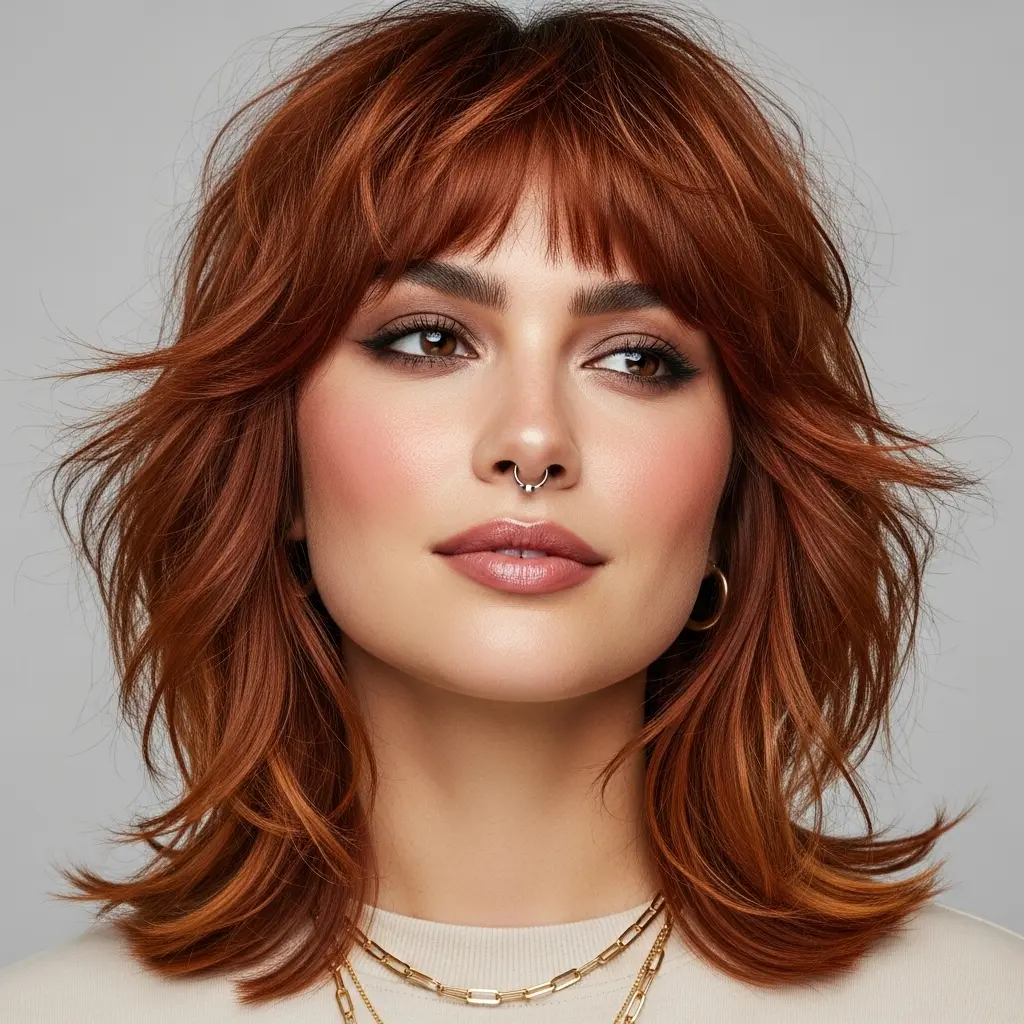
#17 70s Shag Haircut for Short Hair
This ultimate catch-all category encompasses any shag variation sitting above the shoulders, celebrating the versatility and adaptability of this timeless cut. Whether incorporating bangs or going fringe-free, adding color or keeping it natural, the short shag offers endless customization possibilities. The common thread is strategic layering that creates movement, texture, and personality—transforming ordinary short hair into something extraordinary that turns heads and makes mornings easier with its inherent, built-in style.
FAQs
Can I get a 70s shag with very fine, thin hair?
Absolutely! The shag actually works beautifully for fine hair when cut properly with shorter layers at the crown for volume. Avoid over-thinning at the ends, which removes precious density. Ask your stylist to focus on creating lift through strategic layer placement rather than removing bulk, since fine hair lacks bulk to begin with.
How do I prevent my shag from looking dated instead of vintage-cool?
The key is modernizing through color, styling, and subtle contemporary elements. Avoid overly warm, brassy tones that scream 1975, and instead opt for dimensional, natural-looking color. Style with current products and techniques rather than heavy hairspray and hot rollers—think pieced-out texture, not helmet hair.
Will a shag work with my professional job in a conservative industry?
Yes, when styled appropriately. Keep color natural or subtly dimensional, and blow-dry smooth rather than embracing maximum texture. The shag’s layers create flattering movement and softness without looking unprofessional when tamed with the right products and styling approach. Many executives and professionals successfully wear modern shags in corporate environments.
How often do I really need to trim my shag?
Realistically, every 6-8 weeks for optimal shape maintenance. The shag’s beauty lies in its precise layering, which grows out noticeably faster than blunt cuts. If you stretch trims to 10-12 weeks, expect your shag to lose its definition and require more styling effort to look good daily.
Can I transition from long hair to a short shag in one appointment?
Technically yes, but emotionally and practically, consider a gradual transition. Go to a long shag first (collarbone-length), live with it for 6-8 weeks, then go shorter if you love it. This reduces shock and regret while allowing you to adjust to styling shorter, layered hair before committing to the shortest versions.
Is the 70s shag high maintenance for daily styling?
It depends on your hair texture and desired finish. Wavy and curly hair can literally air-dry into beautiful shag perfection with minimal product. Straight hair requires more effort—blow-drying with a round brush or using a flat iron to add bends and movement. Budget 10-20 minutes for styling if you want polished results rather than wash-and-go texture.
Conclusion
The 70s short shag haircut proves that some styles transcend trends, offering timeless appeal that adapts beautifully to contemporary aesthetics while honoring retro roots. Whether you’re drawn to choppy layers, curly volume, or sleek sophistication, there’s a shag variation perfectly suited to your face shape, hair texture, and personal style.
Ready to embrace the shag life? Book a consultation with an experienced stylist who understands layered cutting techniques and bring multiple reference photos showing your desired variation from different angles. Don’t be afraid to communicate your styling commitment and lifestyle honestly—the perfect shag is one you’ll actually maintain and love living with daily.
Join thousands of women who’ve rediscovered confidence and style through the 70s short shag haircut! Share your transformation on social media using #ShagHairRevival and connect with a community of fellow shag enthusiasts who celebrate texture, movement, and that effortlessly cool vibe that never goes out of style.